Systems Thinking, Infrastructure Stress, and Strategic Insight
Today’s most pressing infrastructure and resource challenges—including water supply, electric reliability, transportation congestion, climate volatility, natural gas dependency, and institutional stress—are not isolated technical problems. They are complex, interconnected systems.
When one part of a system becomes stressed, delayed, misaligned, or constrained, the consequences often ripple outward in unexpected ways. Infrastructure failures rarely result from a single cause. More often, they emerge from interacting pressures: policy choices, economic incentives, aging infrastructure, behavioral responses, regulatory fragmentation, operational bottlenecks, weather volatility, capital constraints, and technological change.
Far too often, public agencies and corporate organizations respond incrementally—treating symptoms rather than root causes. Over time, this creates widening gaps between system reality and institutional response.
The result:
Higher costs
Greater institutional stress
Reduced resilience
Political conflict
Operational disruption.
Conceptual Foundations
The thought leaders below espoused systems thinking and are well documented and published in this area are often used to help guide our consulting and advisory approach.
Texas Water Application
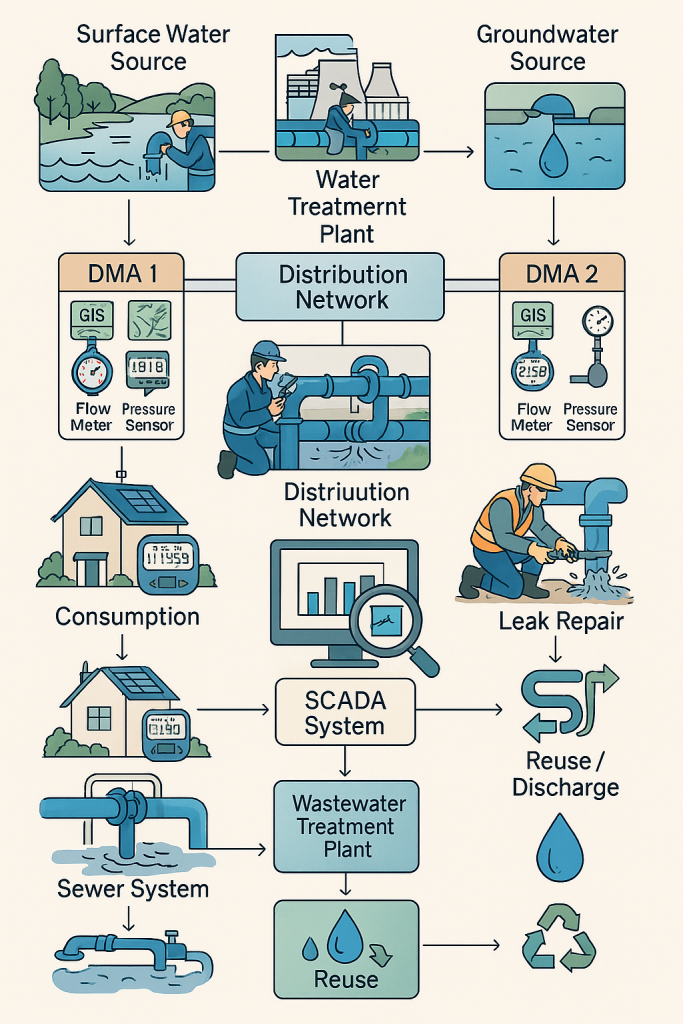
These concepts have been applied to the Texas water ecosystem, where multiple feedback loops involving population growth, drought, economic development, governance fragmentation, regulatory constraints, energy dependence, and infrastructure investment interact simultaneously.
Using geospatial analysis, qualitative screening, and quantitative indicators, C2-IT Solutions has developed regional utility stress models to help identify:
- utilities facing operational or financial strain
- opportunities for collaboration and shared services
- consolidation or joint venture possibilities
- strategic investment priorities
- emerging infrastructure risks
The conclusion is increasingly clear: incremental responses alone are unlikely to keep pace with Texas’ long-term water demands.
Airport Systems Application
The same systems logic applies to America’s airport infrastructure.
Air transportation delays and passenger stress are not simply airline problems. They reflect interacting pressures across TSA staffing, weather exposure, gate congestion, runway constraints, air traffic control complexity, baggage handling, passenger growth, terminal design, and operational decision-making.
To better understand these dynamics, an airport stress rating framework has been developed that evaluates major U.S. airports across multiple structural and performance dimensions. Unlike highly variable annual travel rankings, this framework focuses on underlying systemic stress factors that shape long-term airport resilience and traveler experience.
Future Research Areas
Additional system-level investigations may include:
- healthcare affordability and delivery
- supply chain resilience
- energy transition infrastructure
- public policy stress points
- AI-enabled organizational transformation.